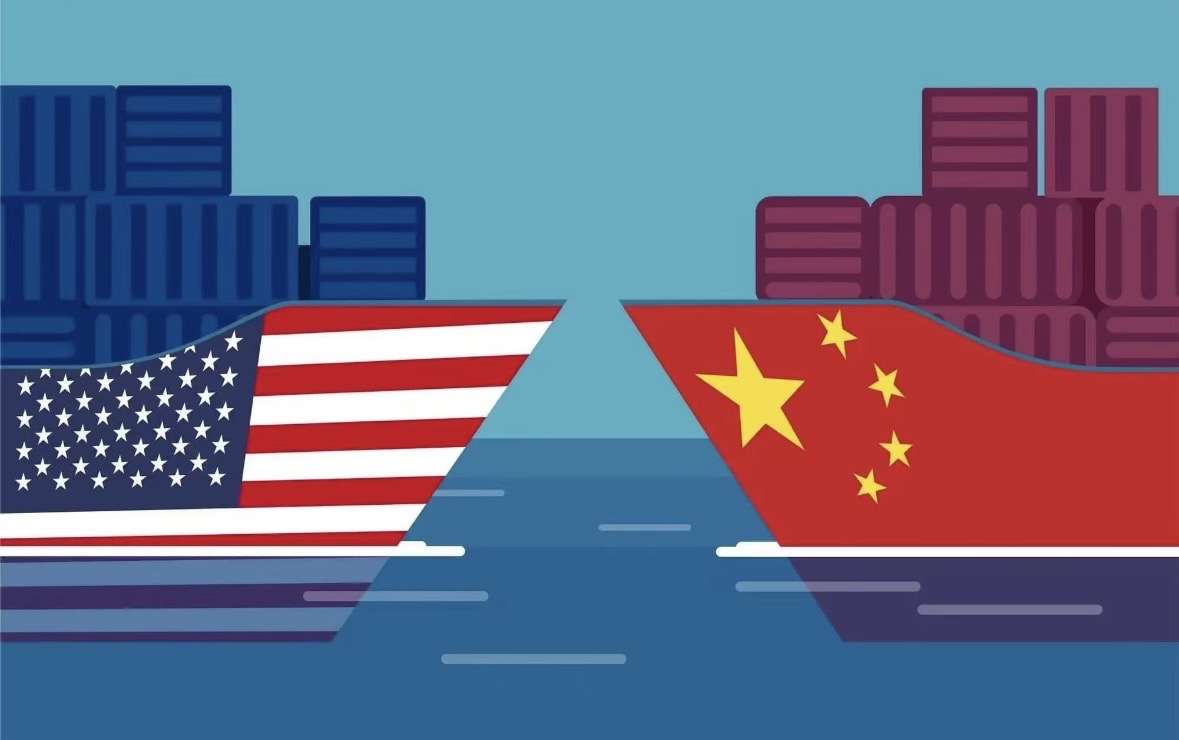
On May 14, 2026, the US-China trade war entered a new phase. Following high-level negotiations in Geneva, the United States agreed to reduce tariffs on Chinese imports from 145% down to 30%, while China reciprocated by cutting duties on US goods to 10%. The agreement triggered an immediate surge in container bookings — up nearly 300% on trans-Pacific routes within days — as businesses rushed to capitalise on the window. For procurement teams around the world, the announcement raised an urgent strategic question: does this truce change everything, or does it simply buy time?
What the Truce Actually Changed — and What It Did Not
The tariff reduction is significant, but the word "truce" is deliberate and instructive. The agreement is structured as a 90-day pause, subsequently extended through November 2026, not a permanent policy reset. The 30% effective tariff rate on Chinese goods still represents a substantial cost burden — and it does not account for the Section 301 tariffs and sector-specific duties that remain in place across a wide range of product categories. For some goods, total effective duty rates still hover between 45% and 50%.
The structural drivers of the US-China trade conflict — technology competition, industrial policy divergence, supply chain security concerns, and geopolitical friction — remain entirely intact. Trade experts and logistics analysts are broadly aligned in their view that the truce creates a temporary reprieve, not a stable new baseline. Procurement managers who treat it as a signal to rebuild single-source China dependency are taking on precisely the kind of concentrated risk that the past three years of supply chain disruption demonstrated is unsustainable.
The Rush Back to China: Understanding the Risk
The container booking surge that followed the Geneva agreement is understandable. Businesses with US-bound inventory needs saw an opportunity to move goods at lower duty rates while the window remained open, and many have been running lean on stock following months of tariff uncertainty and shipping disruption. The short-term operational logic is sound.
The danger arises when short-term opportunism is mistaken for long-term strategy. Some procurement teams, under pressure to cut costs quickly and show margin improvement, may be tempted to abandon the diversification work of recent years — cancelling Vietnam factory qualifications, unwinding alternative supplier relationships, and concentrating spend back into China. This approach optimises for the next six months at the expense of the next three years.
How Smart Procurement Teams Are Using the Window
The businesses positioned to extract maximum value from the tariff truce are those treating it as a strategic resource rather than a reactive opportunity. Rather than simply stockpiling, they are using the period of reduced tariff pressure to accelerate the structural improvements their sourcing operations needed anyway.
This means continuing — or accelerating — the qualification of alternative suppliers in Vietnam, Thailand, Indonesia, and other Southeast Asian markets, using the breathing room to conduct factory audits and production trials without the same cost pressure they faced at peak tariff levels. It means renegotiating supplier agreements with Chinese partners from a position of greater balance, rather than under duress. And it means investing in total landed cost analysis that factors in tariff exposure, logistics costs, quality risk, and payment terms to build sourcing architectures that remain viable across a range of tariff scenarios.
Ezysupplie's end-to-end procurement model is built for precisely this kind of strategic environment. With a vetted supplier network spanning both China and Vietnam, an on-ground buying office team embedded in Asia, and quality control capabilities that cover facility audits, production inspections, and pre-shipment checkpoints, Ezysupplie gives procurement teams the infrastructure to source strategically rather than reactively.
The China-Plus-N Imperative Has Not Gone Away
The tariff truce has done something useful: it has slowed the panic-driven sourcing transitions that were distorting supplier relationships and inflating qualification costs across Southeast Asia. But it has not changed the fundamental arithmetic of supply chain resilience. Research from Q1 2026 shows that 60% of global procurement organisations are planning to implement dual-sourcing strategies this year — maintaining active supplier relationships in at least two geographies for their key product categories.
China's manufacturing ecosystem remains extraordinarily deep and capable. For technical components, precision manufacturing, raw material access, and supply chain density, it retains advantages that no other single market can replicate in the near term. The most effective sourcing strategies of 2026 are not abandoning China — they are positioning it correctly within a broader multi-origin architecture, where its strengths are leveraged without creating single-point-of-failure vulnerabilities.
Building for What Comes After the Truce
The 90-day truce window will close. When it does — or when it is extended under different terms, or when a new trade policy development reshapes the landscape again — procurement teams will be evaluated on the quality of the decisions they made during the relative calm, not just their ability to react in the moment.
Ezysupplie works with procurement teams across Europe and North America to build sourcing strategies that perform across trade policy scenarios, not just during favourable windows. From initial supplier identification and qualification in China and Vietnam, through quality control and customs documentation, to DAP logistics and e-commerce integration, the service model is designed to give businesses a single point of accountability for the full procurement chain.
Ready to Build a Stronger Supply Chain?
Our team is on the ground in China and Vietnam, ready to support your sourcing strategy.
Get In Touch