Importing from China remains one of the most effective strategies for businesses looking to compete in global markets. Competitive pricing, vast manufacturing capacity, and an increasingly sophisticated supply chain make China the world's leading production hub. Yet many businesses approach this market without a clear roadmap, making costly mistakes that could easily be avoided.
This article covers the entire journey: from supplier identification, to factory visits, through to import management. A practical guide for those who want to get it right.
The first step — and often the most underestimated — is supplier identification. It's not simply about finding someone who can manufacture what you need: it's about finding a reliable, capable partner who aligns with your quality standards, volumes, and timelines.
Major sourcing platforms
Online platforms are the starting point for most importers. The most widely used are:
- Alibaba — the world's largest B2B marketplace, with millions of suppliers. Useful for an initial market overview, but requires careful vetting.
- Made-in-China.com — a reliable alternative with strong industrial sector coverage.
- Global Sources — particularly strong in electronics and technology sectors.
- 1688.com — a Chinese-language platform for the domestic market; prices are lower but requires intermediaries or language skills.
Trade fairs
Trade fairs remain the most powerful tool for meeting verified suppliers and examining products first-hand. The Canton Fair (Guangzhou, twice yearly) is the most important in the world by volume and sector diversity. Other key fairs include the Hong Kong Electronics Fair, the China International Import Expo (CIIE) in Shanghai, and sector-specific fairs (e.g. Yiwu for consumer goods, Shenzhen for electronics).
Being physically present at a fair allows you to assess quality, compare suppliers in real time, and establish commercial relationships on solid footing.
How to evaluate a supplier before buying
Never rely on words alone. Before placing an order, it is essential to:
- Verify company documents — business license, certifications (ISO, CE, FDA depending on the sector), and stated production capacity.
- Check reviews and trade history — on Alibaba, analyse years in business, verified transaction volume, and buyer feedback.
- Request samples — always, without exception. Samples reveal true quality and the supplier's ability to meet specifications.
- Schedule a video call — a factory video call (even unannounced) provides valuable insight into the facility and team.
- Distinguish between manufacturers and trading companies — manufacturers generally offer lower prices and greater quality control; trading companies can be useful for mixed or small-volume orders.
Red flags not to ignore
Prices that are significantly below market average, reluctance to show the factory, requests for 100% upfront payment without guarantees, and evasive communication on technical specifications are all warning signs to take seriously.
For significant orders or long-term commercial relationships, a factory visit is not optional: it is a necessity. No online platform, video call, or certification replaces a direct assessment of what actually happens inside a production facility.
Why visit your supplier
A factory visit allows you to:
- Verify the supplier's physical existence (it is not uncommon to find intermediaries posing as manufacturers).
- Assess real production capabilities — machinery, technology, installed capacity.
- Observe working conditions and operational standards.
- Build the personal relationship that carries significant weight in Chinese business culture.
- Negotiate better terms in person than is possible via email.
Preparing for the visit
An effective visit requires preparation. Key steps include:
Before departure
- Define a checklist of everything you want to verify (certifications, equipment, packaging capacity, warehouse, production lines).
- Prepare technical questions specific to your product.
- Book an interpreter if you are not fluent in Mandarin Chinese.
- Check production schedules to visit the factory during full operational hours, not when it is idle.
During the visit
- Ask to see the entire facility, not just the showroom.
- Photograph machinery, raw materials, work-in-progress, and finished products.
- Speak with technical managers as well as sales staff.
- Evaluate cleanliness, space organisation, and how non-conformities are handled.
After the visit
- Write a report documenting your observations.
- Request any additional documentation that came up during the visit.
- Compare your on-site impressions with the information gathered online.
The cultural importance of personal relationships
In China, the concept of guanxi (关系) — literally 'relationships' — is central to business. Investing time in a business lunch, an informal conversation, or a small gesture of courtesy can make the difference between a supplier who puts you at the back of the queue and one who treats you as a priority client. This is not superficiality: it is an integral part of how business is done in this market.
Once the supplier is found and the deal is signed, you enter the operational phase of importing. This phase involves a dense set of bureaucratic, logistical, and financial variables that can turn a good deal into a problem if not managed properly.
Defining commercial terms: Incoterms
Incoterms (International Commercial Terms) define who bears costs, risks, and responsibilities at each stage of transportation. The most common in China imports are:
- EXW (Ex Works) — the supplier makes goods available at the factory; all subsequent costs fall to the importer.
- FOB (Free on Board) — the supplier handles transport to the port of shipment; from there, responsibility passes to the buyer.
- CIF (Cost, Insurance, Freight) — the supplier covers cost, insurance, and freight to the destination port.
- DAP (Delivered at Place) — the supplier delivers to the agreed destination; customs clearance remains with the importer.
For those new to importing from China, FOB often represents a good balance between control and simplicity.
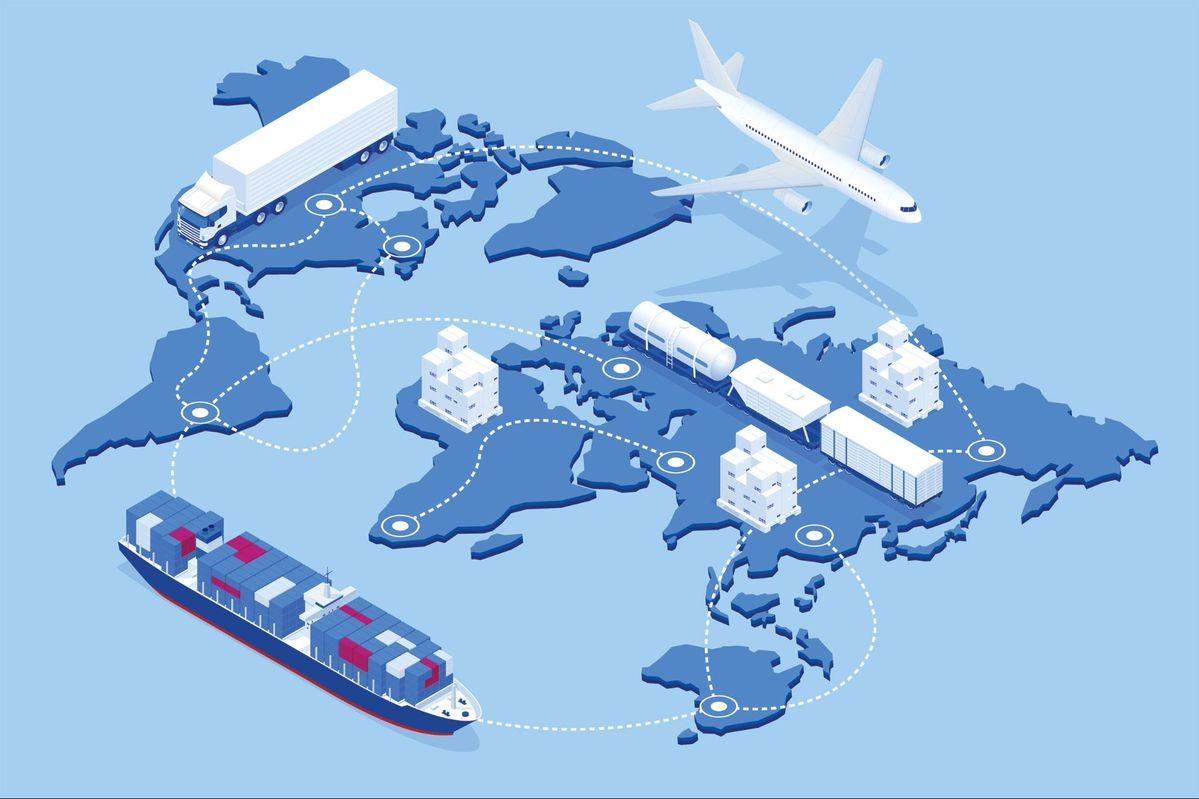
Choosing a shipping method
- Sea freight (LCL or FCL) — the most economical for large volumes. Transit times range from 3 to 6 weeks.
- Air freight — expensive but fast (3–7 days). Suitable for high-value or urgent goods.
- Express courier (DHL, FedEx, UPS) — ideal for samples and small quantities.
- Rail (China–Europe routes) — a middle ground between cost and transit time, growing strongly through the Belt and Road Initiative.
Required documentation
- Commercial Invoice
- Packing List
- Bill of Lading or Air Waybill
- Certificate of Origin
- Product certifications (CE, RoHS, FDA, etc. depending on the product category)
Incomplete or incorrect documentation is among the most common causes of customs delays, with significant cost and time implications.
Customs duties and VAT
Each product category has a specific customs code (HS code) that determines the applicable duty rate. In Europe, this may also include anti-dumping duties on specific product categories (steel, solar panels, electric bicycles, etc.) and import VAT. Correctly classifying goods before each shipment is essential to avoid customs penalties and accurately plan landed costs.
The role of the customs broker
Working with a competent customs broker almost always pays off. A good broker handles documentation, optimises tariff classification, prevents delays, and manages the entire process efficiently.
One of the most critical aspects of importing from China is quality control. When production takes place thousands of kilometres away, direct supervision of every stage is impossible. Established practices exist to address this:
- Pre-production inspection — verification of raw materials and components before production begins.
- During Production Check (DUPRO) — inspection during the manufacturing process, when approximately 20–30% of items are completed.
- Pre-shipment inspection (PSI) — the most common check: verification of finished goods before shipment.
- Container loading supervision — oversight of container loading to prevent last-minute substitutions.
Partnering with someone who has a physical presence in China — who knows the territory, the suppliers, and local practices — is often the difference between a successful import and one that ends in dispute.
Importing from China is not inherently complicated, but it does require method, preparation, and the right partners. The difference between those who succeed and those who don't is not luck: it is the quality of the relationships built, the due diligence conducted on suppliers, and the ability to manage the entire logistics chain in a structured way.
Every stage of the process — from supplier research to factory visits, through customs clearance and quality control — is an opportunity to reduce risk and increase the competitiveness of your supply chain. Those who approach it with the right preparation turn importing from China from a risk into a strategic advantage.