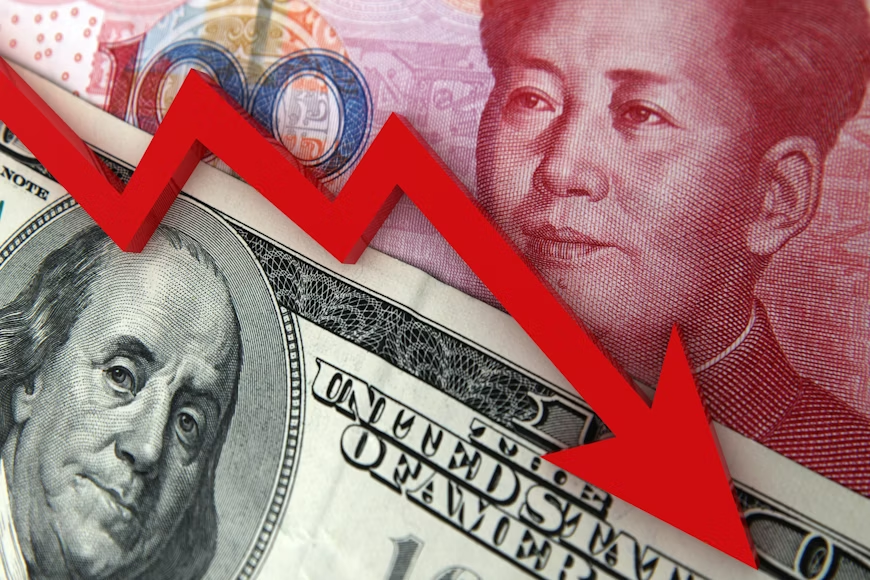
When the Trump administration implemented a 34% tariff on Chinese imports on 2 April 2025, the global procurement landscape shifted fundamentally overnight. This new duty—stacked on top of existing 20% tariffs from February and pre-existing rates ranging from 7.5% to 100%—sent shockwaves through supply chains worldwide. Businesses that had spent years optimizing production networks centred on Chinese manufacturing suddenly faced a stark choice: adapt or absorb unsustainable cost increases.
The Tariff Escalation and Immediate Market Response
The April announcement was unprecedented in scope. Rather than negotiating incremental tariff adjustments, policymakers introduced compound duties that pushed total tariff exposure well beyond 50% for many product categories. China responded swiftly, announcing retaliatory tariffs of 84% and then 125% on selected US goods, creating a spiral of escalation that threatened to disrupt global trade flows.
The immediate reaction was predictable but dramatic. Companies rushed to frontload shipments from China before tariffs took full effect, creating a surge in container volumes at major ports. The Port of Los Angeles, Long Beach, and other gateway facilities saw unprecedented congestion. Freight forwarding costs spiked, inventory financing costs ballooned, and working capital requirements for procurement teams expanded dramatically. Businesses that could afford it accelerated orders; those that couldn't faced increasingly difficult supply-side decisions.
Why Diversification Became Non-Negotiable
The April tariff shock exposed a critical vulnerability in many procurement strategies: over-concentration in a single sourcing geography. Companies that had banked on China's cost advantage and manufacturing sophistication found that advantage rapidly eroding. Within days, procurement managers were tasked with identifying alternative suppliers in Vietnam, India, Indonesia, Thailand, and other Southeast Asian nations.
This wasn't a temporary reaction. The consensus among procurement professionals and supply chain analysts was clear: the April tariffs signalled a structural shift in global trade policy, not a short-term negotiation tactic. Businesses began allocating resources to qualify new suppliers, audit manufacturing facilities, and negotiate contracts across multiple countries. The cost of setting up alternative supply chains was significant, but the cost of inaction—remaining 100% dependent on tariff-exposed Chinese suppliers—was becoming untenable.
Building Resilience Through On-Ground Expertise
Successfully diversifying sourcing networks requires more than simply transferring purchase orders to new suppliers. Procurement teams need reliable, on-the-ground intelligence about supplier quality, production capacity, regulatory compliance, and cost structures across multiple Asian countries. Quality control capabilities are essential; the last thing businesses need is to reduce tariff exposure only to face increased rejection rates and quality failures.
This is where buying office infrastructure becomes critical. Companies establishing dedicated procurement teams in Vietnam, China, and other key sourcing regions gained immediate advantages: direct relationships with new suppliers, real-time visibility into production schedules, and the ability to enforce quality standards without relying solely on inspection at port. For many businesses, this represented a significant shift from the traditional model of outsourcing all procurement decisions to intermediaries or freight forwarders.
Planning Your Response to Tariff Volatility
The April 2025 tariff shock revealed that business continuity in procurement now requires strategic planning for trade policy volatility. Forward-thinking companies are already developing scenarios for multiple tariff environments, stress-testing their supplier networks, and building buffer inventory in strategic categories. They are also qualifying backup suppliers proactively rather than reactively, and establishing direct relationships with manufacturers in lower-tariff jurisdictions.
Ezysupplie's manufacturing and procurement network across China and Vietnam, combined with our on-ground buying office expertise, enables businesses to navigate tariff volatility with confidence. Rather than reacting to policy shocks, companies can build diversified, resilient supply chains that perform across multiple trade scenarios. Whether you need to accelerate supplier diversification, establish Vietnam-based sourcing capabilities, or implement quality assurance across a multi-country supply chain, having trusted procurement partners with deep regional expertise is no longer optional—it's a business necessity.
Ready to Strengthen Your Supply Chain?
Our team helps businesses source with confidence across Asia — from trade fair support and quality control to end-to-end procurement.
Speak With Our Team