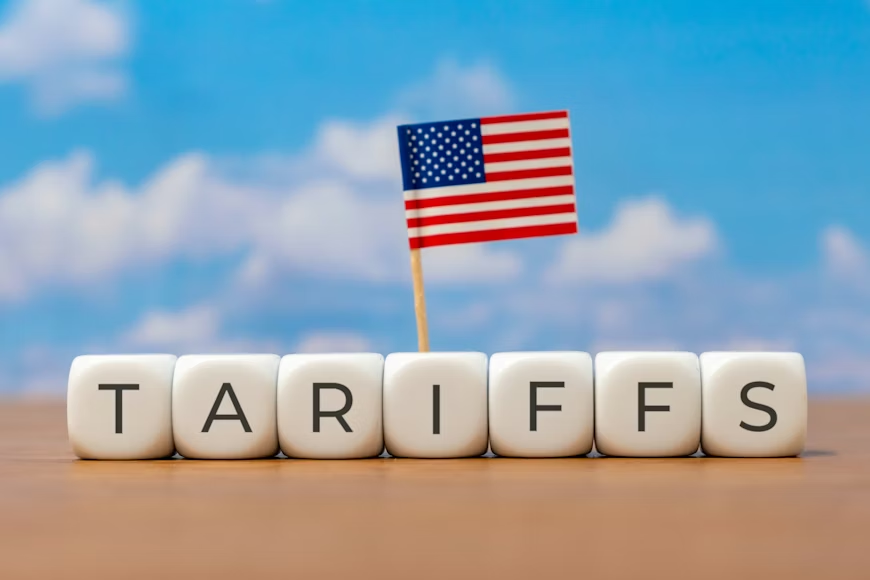
By October, procurement teams are operating in a state of controlled urgency. The first half of 2025 was defined by frontloading—bringing forward orders, accelerating shipments, and stockpiling inventory in anticipation of tariffs, regulatory changes, and supply chain volatility. Now, as Q4 begins, the pendulum swings. After months of acceleration, it is time to normalise inventory levels, lock in supplier agreements, and position the organisation to start 2026 from a position of strength.
The H1 Frontloading and the Q4 Normalisation
Earlier this year, procurement data was unequivocal: 94.5 per cent of supply chain leaders expected to relocate parts of their business within the next 18 months. That forecast drove extraordinary activity in H1. Orders were pulled forward, lead times were compressed, and inventory in distribution centres and warehouses swelled to historically high levels. Container costs remained volatile, logistics providers operated at capacity, and every procurement team was racing to secure supply before the next disruption.
Q4 is when that strategy normalises. Frontloading has served its purpose; inventory buffers are in place. Now the priority shifts to calibration. Procurement teams must assess what was ordered, what has arrived, what is selling, and what is sitting in warehouse. Slow-moving SKUs must be managed, cash tied up in excess inventory must be freed, and purchasing velocity must be reset to sustainable levels. This is not a time to order aggressively; it is a time to order strategically.
Supplier Agreements and Contract Renewals
Q4 is also the traditional season for strategic supplier reviews and contract renewals. After nine months of partnership, procurement teams have real data on supplier performance: quality, timeliness, responsiveness, flexibility, and cost competitiveness. This is the moment to consolidate that insight and negotiate agreements for 2026.
Organisations that excel at this process conduct structured reviews, gathering input from operations, quality, and logistics functions. They assess supplier capability against strategic priorities. They benchmark costs against market rates. They identify underperformers that should be phased out, and high-performers that warrant expanded volumes or deepened partnerships. They then enter contract renewal discussions with clear objectives: total cost of ownership, quality commitments, supply reliability, and terms that reflect the realities of 2026 procurement—including hedging against geopolitical volatility, diversification requirements, and evolving regulatory frameworks.
Holiday Season Logistics and Year-End Positioning
The holiday season intensifies logistics demand. Container availability tightens, freight rates spike, and customs processing times extend. Procurement teams that have normalised inventory and secured supplier agreements are able to navigate this period with stability. Those that have not—that are still scrambling to fulfil orders, rectify inventory imbalances, or lock in supplier terms—face stress and margin erosion.
Q4 procurement planning is about more than tactical efficiency; it is about strategic positioning. It is about closing 2025 with accurate inventory, proven suppliers, and locked pricing. It is about building the foundation for 2026—a year that will bring new tariff landscapes, ongoing diversification, and continued digital transformation of procurement itself. Organisations that invest in strategic supplier partnerships, maintain realistic inventory posture, and plan their supply chains with a 12-month perspective will emerge stronger. Those that do not will face preventable challenges in the new year.
Ready to Strengthen Your Supply Chain?
Our team helps businesses source with confidence across Asia — from trade fair support and quality control to end-to-end procurement.
Speak With Our Team